How to Prepare for a Pediatrician Visit: What Data to Bring

The Well-Baby Visit Schedule
Well-baby visits — also called well-child checks or health supervision visits — are scheduled appointments designed not to treat illness but to monitor normal development, catch problems early, and give parents an opportunity to ask questions in a structured setting. Unlike most medical appointments, these visits are scheduled even when nothing is wrong, precisely because the first year involves so much change so quickly.
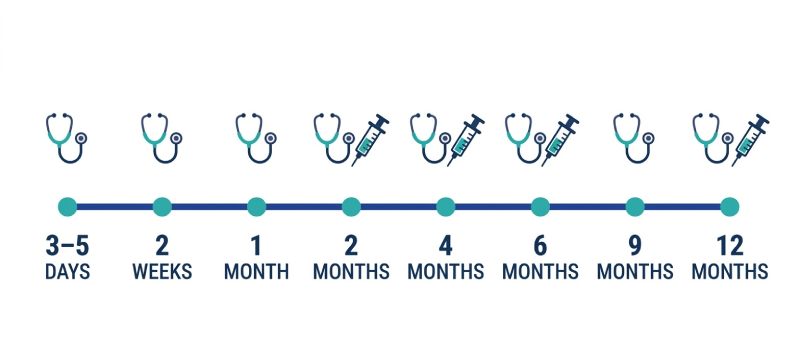
AAP recommended well-baby visit schedule
3–5 days: weight check · jaundice assessment · feeding review · maternal wellbeing
2 weeks: weight regain confirmation · feeding frequency review · cord stump / circumcision healing
1 month: growth · developmental milestones · sleep patterns · feeding volumes
2 months: growth · first vaccinations (DTaP, Hib, IPV, PCV, Rotavirus) · postpartum depression screen
4 months: growth · developmental milestones · second vaccination round · solids readiness discussion
6 months: growth · third vaccination round · solid food introduction review · fluoride discussion
9 months: growth · developmental screen · iron and lead risk assessment · finger foods review
12 months: growth · developmental milestones · MMR and varicella vaccines · transition to whole milk discussion
Each visit includes measurement of weight, length, and head circumference, which are plotted on a growth chart to assess the trend over time. A developmental assessment screens for age- appropriate motor, language, and social milestones. Vaccinations begin at the 2-month visit and follow the CDC immunization schedule. For a detailed look at what growth chart numbers mean and when they warrant concern, see our guide on baby growth charts.
The Data Your Pediatrician Asks For Every Visit
Every well-baby visit opens with the same set of questions, and your answers feed directly into the clinical assessment. A pediatrician who hears "she's feeding well, sleeping okay, and diapers seem normal" gets much less useful information than one who hears "she's taking about 90 ml every 3 hours, sleeping 14 hours total with one 5-hour stretch at night, and producing 6–8 wet diapers and 2–3 stools per day." Specific numbers matter.
Feeding data your pediatrician will ask about: how many times the baby feeds in 24 hours, how much per feed (ml or oz if bottle-feeding; minutes per side if breastfeeding), which side was offered last (for breastfeeding), and whether there are any concerns about latch, refusal, or vomiting.
Sleep data: total hours of sleep per 24-hour period, the longest single stretch at night, the number of times the baby wakes overnight, and the approximate number and length of daytime naps. Your pediatrician uses this to assess total rest against age norms and to screen for signs of sleep disruption.
Diaper data: number of wet diapers per day (fewer than 6 in babies under 6 weeks is a concern), stool frequency and consistency (breastfed babies may stool after every feed or once a week — both can be normal; formula-fed babies typically stool 1–4 times per day), and any changes in color or blood in stool.
Any specific concerns since the last visit: rashes, behaviour changes, prolonged crying episodes, unusual sounds while breathing, feeding refusals, or anything that worried you enough to consider calling in between appointments.
Preparing a 3-Day Summary
A single day of feeding and sleep data can be misleading — it may have been an unusually good or unusually hard day. Three consecutive days of logged data is the minimum needed for a pediatrician to spot a genuine pattern versus a one-off event. Three days also captures the natural variability in infant feeding and sleep, which tends to be wider than parents expect.
What to include in a 3-day summary: total feeds per day (and total volume or nursing time), total sleep per day broken into night sleep and nap sleep, total wet diapers and stools per day, and any unusual events (vomiting, prolonged crying, feeding refusal, unusual stool color). This takes 60 seconds per event to log and 5 minutes to review before your appointment.
BabyJot generates feeding totals, sleep summaries, and diaper logs in a daily view that you can screenshot or read directly at the appointment. What to highlight when you arrive: anything that changed in the past 2–3 weeks, anything that appeared consistently across the three days, and any single event that concerned you even if it did not repeat.
For a full guide to the milestones your pediatrician will assess at each visit alongside this data, see our article on tracking baby milestones.
Questions to Ask at Each Visit
One of the most underused aspects of well-baby visits is the question-and-answer time. Parents often arrive with a mental list that evaporates under the stress of undressing a baby, managing a waiting room, and fielding the doctor's assessment. Writing questions down before you go — and keeping a note in your phone for questions that arise between visits — is a simple fix that dramatically improves the value of each appointment.
Questions to consider asking by age
2–4 weeks: "How do I know feeding is working if I can't measure breast milk?" · "What does normal jaundice look like at this point?" · "What should I watch for at home?"
2 months: "What reactions to vaccines should I expect, and what should I call about?" · "When should she start sleeping a longer stretch?"
4 months: "What is the 4-month sleep regression and how long does it last?" · "Is she ready to start solids, or should we wait?"
6 months: "How do I introduce allergens safely?" · "What textures should I be offering?"
9–12 months: "When should her first words appear?" · "Is this behaviour normal?" · "When should she be walking?"
Your pediatrician has seen thousands of babies and can answer the questions you feel embarrassed to ask. There is no question that is too basic or too detailed. The appointment is for you as much as for the baby.
Vaccinations: What to Expect
The standard immunization schedule begins at the 2-month visit and continues with multiple rounds through the first year and beyond. At 2 months, babies typically receive DTaP (diphtheria, tetanus, pertussis), Hib (Haemophilus influenzae type b), IPV (polio), PCV (pneumococcal), and Rotavirus. This can mean 2–4 injections plus an oral vaccine in one visit — and the resulting reaction is normal, predictable, and temporary.
Common post-vaccination reactions include fussiness and crying in the hours immediately after the injection; a low-grade fever (under 38.5°C) starting 4–12 hours later and lasting 24–48 hours; redness, swelling, and tenderness at the injection site; and increased sleep or mild changes in feeding. These are all signs of the immune system responding as intended, not signs that the vaccine caused harm.
For fever management after vaccines, paracetamol (acetaminophen) at the dose your pediatrician has provided based on your baby's weight is appropriate. Do not use ibuprofen in babies under 6 months, and do not use aspirin in children at any age. Applying a cool, damp cloth to the injection site reduces local soreness. Log the vaccination date and any reactions in BabyJot health events — this record is useful if reactions seem unusually prolonged and you need to describe the timeline to your provider.
Call your pediatrician if fever exceeds 39°C after vaccination, if the injection site becomes very swollen or warm beyond 48 hours, or if the baby is inconsolably crying for more than 3 hours after the visit.
When You're Worried Between Visits
Well-baby visits cover the expected; illnesses and concerns do not wait for scheduled appointments. Knowing what warrants a call versus a scheduled visit versus the emergency department — and knowing that your pediatric office almost certainly has a nurse advice line available by phone during and after hours — reduces the paralysis that comes with first-time parenthood.
Contact your pediatrician promptly (do not wait for the next scheduled visit) for: any fever over 38°C in a baby under 3 months; a baby who is feeding significantly less than usual for more than two consecutive feeds; persistent green or bloody stools; a rash that appears suddenly and covers a large area; any unusual sound while breathing; or any behaviour that feels suddenly and significantly different from baseline.
Before calling, take 60 seconds to document the situation with timestamps: when the symptom started, how long it has lasted, any associated symptoms, the last feed time and volume, and the baby's temperature. This information helps the nurse triage your concern accurately and give you the right guidance quickly. A logged timeline in BabyJot from the past 24 hours provides exactly this context without requiring you to reconstruct it from memory during a stressful call.
For specific guidance on what to look for in the very first days after birth, see our guide to the first week with a newborn.
Bring Your BabyJot Log to Every Visit
The well-baby visit is one of the highest-value interactions you will have with your healthcare provider in your baby's first year. Arriving with three days of feeding, sleep, and diaper data — rather than trying to answer questions from sleep-deprived memory — makes every minute of that appointment more productive.
BabyJot logs every feed, nap, and diaper change and presents the data in a clean daily summary you can read directly to your pediatrician. No account required, no data leaves your device.
Latest Articles

First Week With a Newborn: What No One Tells You

Newborn Sleep Patterns: What to Expect Week by Week

Tracking Baby Milestones: What to Log and Why It Matters

Breastfeeding vs. Formula: A Practical Guide for New Parents

Newborn Jaundice: What Parents Need to Know

Understanding Baby Growth Charts: Percentiles Explained

Baby Sleep Regression: Ages, Signs, and What Actually Helps

Safe Sleep for Babies: AAP Guidelines Every Parent Should Know

Baby Nap Schedule by Age: How Many Naps and How Long
Pumping Breast Milk: Schedule, Storage Guidelines, and Tips

Starting Solid Foods: Signs of Readiness and First Foods to Try

How Much Should a Newborn Eat? Feeding Amounts by Age
Baby Diaper Guide: What's Normal and When to Worry
