Breastfeeding vs. Formula: A Practical Guide for New Parents

Both Options Can Be the Right Choice
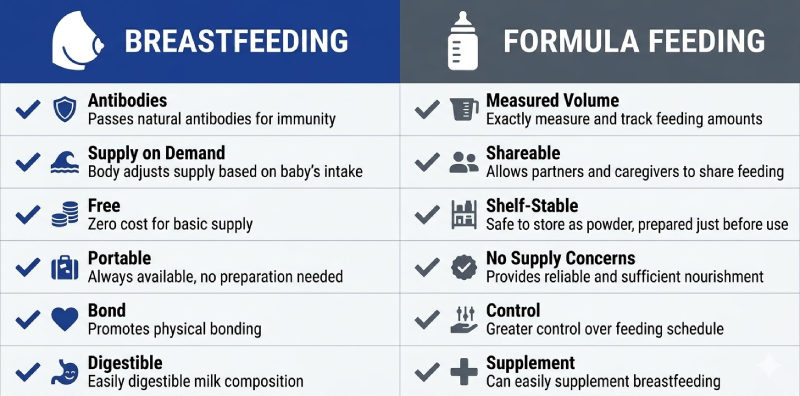
The breastfeeding vs. formula debate is one of the most charged topics new parents encounter — and one of the least helpful. The honest answer is that both options are nutritionally valid, and the best choice for your family depends on your health, your baby's needs, your anatomy, your work situation, and the support available to you.
The American Academy of Pediatrics (AAP) recommends exclusive breastfeeding for the first 6 months, continuing alongside solid foods to 12 months or beyond. At the same time, the AAP explicitly states that fed is best — a baby who is thriving on formula is doing exactly what a baby should do.
Combination feeding — breastfeeding alongside formula top-ups — is also valid and common. Many families combine both methods successfully, particularly after returning to work or when supply is variable. There is no rule that says it must be one or the other.
Breastfeeding: Benefits, Challenges, and Realistic Expectations
Breastmilk is uniquely tailored to your baby. It contains antibodies — especially in the first milk, called colostrum — that provide passive immunity while your baby's immune system matures. Research consistently links breastfeeding with lower rates of SIDS, ear infections, respiratory illness, and childhood obesity. For the birthing parent, breastfeeding supports uterine recovery and is associated with reduced risk of postpartum depression and certain cancers.
The challenges are real and worth knowing in advance. Latch difficulties, engorgement, nipple pain, and supply concerns are among the most common reasons people stop breastfeeding earlier than they intended. The important thing to know is that most of these problems are solvable — particularly with the help of a certified lactation consultant (IBCLC) in the first week.
How milk supply develops
Colostrum is present in the breast from mid-pregnancy and is produced for the first 1–3 days after birth. It is thick and yellow, low in volume (5–7 ml per feed is normal), and extremely high in antibodies and growth factors. Do not be alarmed by the small amounts — your baby's stomach is the size of a marble on day one.
Transitional milk replaces colostrum between days 3 and 7. Mature milk typically arrives by the end of week 2. Supply is driven entirely by demand: the more frequently milk is removed from the breast, the more the body produces. This is why frequent feeding in the first 6 weeks — ideally 8–12 times per 24 hours — is the single most effective way to establish a strong supply.
How to Know If Breastfeeding Is Working
Because you cannot see how much milk a breastfed baby takes in, it is natural to wonder whether feeding is going well. The most reliable signs are diaper output, weight gain, and feeding behavior.
Signs of adequate intake
Wet diapers: 6 or more per day from day 5 onward
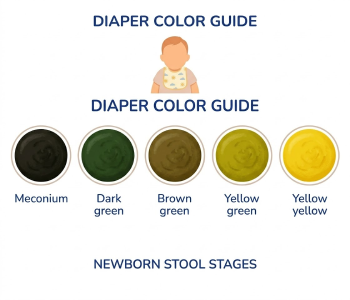
Stools: Yellow and seedy by day 4–5 (after meconium clears)
Weight: Baby regains birth weight by day 10–14
Feeding behavior: Audible swallowing during feeds; baby appears satisfied and releases breast spontaneously
Breast changes: Breasts feel softer after a feed
Signs to seek help promptly
Fewer than 6 wet diapers/day after day 5
Weight loss greater than 10% of birth weight, or not regaining by day 14
Pain lasting beyond the first 10 seconds of latch at every feed
Baby feeding longer than 45 minutes every session and never seeming satisfied
Cracked or bleeding nipples persisting beyond 2 weeks
For detailed guidance on feeding volumes and frequency, see how much should a newborn eat.
Formula Feeding: Types, Preparation, and Safety
Formula is a safe, nutritionally complete alternative to breastmilk. Modern infant formulas are regulated to meet strict nutritional standards and provide everything a baby needs to grow well.
Types of formula
Cow's milk-based: The most common and suitable for most babies. The proteins are modified to be digestible for infants.
Soy-based: An option for families avoiding animal products, though not recommended for premature infants.
Hydrolyzed (partially or extensively): Proteins are broken down into smaller pieces, suitable for babies with sensitive digestion or mild cow's milk protein intolerance.
Amino acid-based: For babies with confirmed cow's milk protein allergy (CMPA); proteins are fully broken down. Usually prescribed by a pediatrician.
Preparation and safety
Sterilise all bottles and teats before use in the first months. Use cooled boiled water for babies under 2 months, or when in doubt about water safety. Measure formula powder precisely using the scoop provided — do not add extra powder to make feeds "more filling."
Prepared formula can be stored in the fridge for up to 24 hours. Once a feed has started, discard any remaining formula after 1 hour at room temperature. Never microwave formula — it creates uneven hot spots that can burn your baby's mouth. Warm bottles in a bowl of warm water instead.
Combination Feeding: Making It Work
Combination feeding — offering both breast and bottle — is one of the most common approaches, particularly for parents returning to work, those with low supply concerns, babies who have difficulty latching, or families who want to share feeding responsibilities between caregivers.
The most common concern with combination feeding is nipple confusion — the worry that a baby who learns to drink from a bottle will refuse the breast. This is a real phenomenon but can be minimised. Wait until breastfeeding is well established (usually 3–4 weeks) before introducing a bottle. Use a slow-flow nipple that requires active sucking rather than a fast flow that rewards passive drinking.
A practical approach: breastfeed first at each session, then offer a formula top-up if your baby is still hungry. This protects your supply (breast stimulation comes first) while ensuring your baby gets enough volume.
Tracking Feeds Regardless of Method
Whether you are breastfeeding, formula feeding, or combining both, logging feeds gives you the data you need to understand your baby's intake — and to answer your pediatrician's questions confidently.
For breastfeeding: Log the start time, which side you fed on, and how long the session lasted. Alternating sides matters — the breast that was last is the one to start with next time.
For formula: Log the volume offered and consumed, and the type of formula. This makes it easy to spot if volumes are increasing as your baby grows.
For both: Daily totals matter more than any individual feed. A short feed followed by a long one is normal. Watching the daily volume or nursing frequency gives a more accurate picture than trying to assess each feed in isolation.
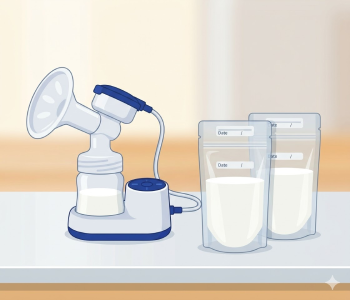
BabyJot supports both breastfeeding (with left and right side stopwatch timers) and bottle feeds (with volume logging). See pumping and milk storage for guidance on tracking pumped feeds and managing a freezer stash.
When to Consult a Lactation Consultant
Lactation consultants (IBCLCs) are trained specialists in infant feeding. They are not only for people who are struggling — many parents find a single session in the first week prevents problems from developing. Seek one out if you experience any of the following:
Pain beyond the first 10 seconds of latch at every feed — pain throughout a feed is a sign that latch position or technique needs adjustment.
Weight loss greater than 10% or baby not regaining birth weight by day 14.
Cracked or bleeding nipples that persist beyond 2 weeks — these are a latch issue, not an inevitable part of breastfeeding.
Baby feeding for more than 45 minutes at every session without seeming satisfied — this may indicate inefficient milk transfer.
Supply concerns — both perceived low supply (very common and often unfounded) and genuine low supply can be assessed and supported by a lactation consultant.
Log Every Feed in BabyJot
Whatever feeding method you choose, logging every feed in BabyJot helps you stay confident between pediatrician visits. Track breastfeeding sessions with the built-in side timer, or log formula volumes — all in one place, privately on your device.
Latest Articles

First Week With a Newborn: What No One Tells You

Newborn Sleep Patterns: What to Expect Week by Week

Tracking Baby Milestones: What to Log and Why It Matters

Newborn Jaundice: What Parents Need to Know

Understanding Baby Growth Charts: Percentiles Explained

Baby Sleep Regression: Ages, Signs, and What Actually Helps

Safe Sleep for Babies: AAP Guidelines Every Parent Should Know

Baby Nap Schedule by Age: How Many Naps and How Long
Pumping Breast Milk: Schedule, Storage Guidelines, and Tips

Starting Solid Foods: Signs of Readiness and First Foods to Try

How to Prepare for a Pediatrician Visit: What Data to Bring

How Much Should a Newborn Eat? Feeding Amounts by Age
Baby Diaper Guide: What's Normal and When to Worry
