How to Bathe a Newborn: Step-by-Step Guide
Sponge Baths Until the Cord Falls Off
The umbilical cord stump is the small remnant of the cord that remains attached after clamping and cutting at birth. It dries and falls off on its own, typically between 7 and 21 days, and the single most important thing you can do to support that process is keep it dry. Submerging the stump — in a tub bath or any standing water — slows the drying process and increases the risk of infection. Until the stump has completely fallen off and the belly button area has healed, sponge baths are the right approach.
A sponge bath does not mean bathing the baby from head to toe — it means using a warm, damp cloth to clean only what actually needs cleaning. Newborns do not get dirty in the way older babies and toddlers do. The areas that need regular attention are the face (milk residue around the mouth, occasional eye discharge), the neck folds (where milk pools and creates a warm, moist environment for rash), and the diaper area (cleaned with every nappy change). The rest of the body can wait.
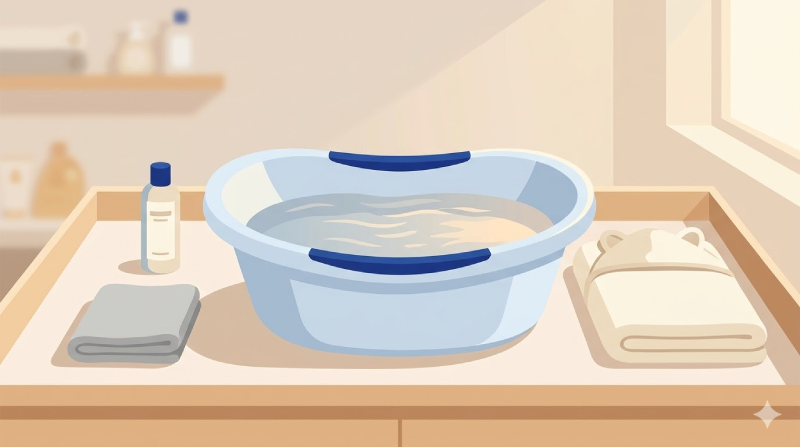
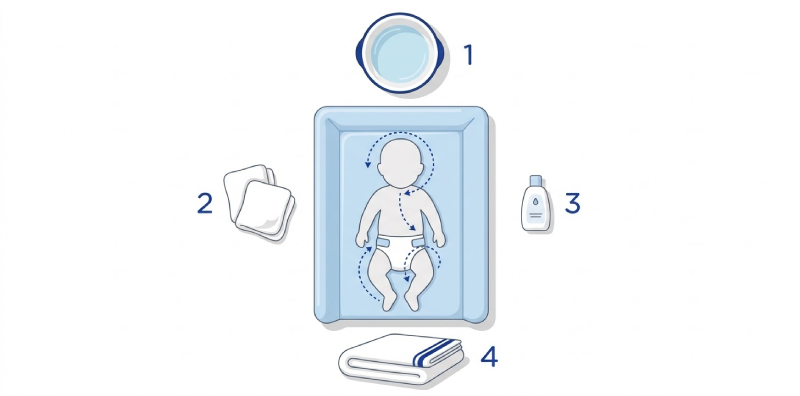
For a sponge bath, prepare everything before you start: warm the room to avoid chilling, fill a bowl with warm water (test with your inner wrist — it should feel pleasantly warm, not hot), and have a fresh washcloth, mild soap if needed, and a dry towel within reach. Undress only the part of the body you are cleaning, and keep the rest covered and warm.
Work from cleanest to dirtiest: start with the face (eyes wiped with a damp cloth from inner corner to outer, one clean area of cloth per eye), then ears (outer ear only — never insert anything into the ear canal), then neck and chest, then arms and hands, then feet, and finally the diaper area. Pat dry gently — friction on newborn skin is unnecessary and irritating.
First Tub Bath: When and How
The first tub bath happens once the cord stump has completely fallen off and the belly button area looks fully healed — dry and closed, with no scabbing or moisture. This typically happens somewhere between 1 and 3 weeks after birth. For baby boys who had a circumcision, wait until that area is also healed before introducing a tub bath.
An infant tub — a small, supportive basin designed to hold a baby safely with only a few centimetres of water — is the safest option for the first months. A clean sink with a non-slip mat is also workable. Bathing a very young baby in a full-sized bathtub without a supportive insert is difficult because you cannot safely support the baby with one hand while washing with the other. Water level should be 5–8 cm (2–3 inches) — enough to cover the lower body but not deep enough to reach the face if the baby slips.
Water temperature is one of the most important safety details: newborn skin is thinner and more sensitive than adult skin, and a temperature that feels comfortable on an adult hand can scald a baby. Test with your elbow or the back of your wrist, not your fingers — these areas are more sensitive to heat. The target is around 37°C (98.6°F), which feels comfortably warm but not hot. If you have a bath thermometer, 36–38°C is the target range.
Step-by-step tub bath sequence
1. Prepare everything first. Towel, washcloth, clean nappy, and fresh clothing within arm's reach before undressing the baby.
2. Fill the tub. 5–8 cm of water, tested for temperature with elbow or back of wrist.
3. Undress the baby. Remove nappy last and clean any stool before placing in the tub.
4. Support the head throughout. One hand behind the neck and head at all times. Never release this support.
5. Clean face first. Damp cloth, inner to outer corner on each eye, separate area of cloth for each eye.
6. Wash hair. Cup water over the head, apply a tiny drop of baby wash, rinse by cupping water again. Hold head tilted slightly back to keep water from the face.
7. Wash body. Neck folds, armpits, between fingers, between toes, genital area last.
8. Lift out securely. Wet babies are slippery — use both hands, support head and bottom. Wrap immediately in hooded towel.
The most important safety rule for tub bathing at any age: never leave a baby unattended in or near water, even for a second. Infant drowning can occur in as little as 2.5 cm of water, and it is silent. If the phone rings, the doorbell sounds, or another child needs attention, take the baby with you — wrap them in a towel and carry them. Nothing that happens outside the bathroom is more important than maintaining direct supervision.
Bathing Frequency: How Often Is Enough?
The AAP recommends bathing newborns no more than three times per week. This surprises many new parents who assume more frequent bathing is more hygienic, but the opposite is true for newborn skin: daily bathing strips the natural oils from the skin barrier, leading to dryness, irritation, and increased susceptibility to eczema in genetically predisposed babies. Three times per week is sufficient to keep a newborn clean because newborns are not mobile enough to get genuinely dirty.
As babies become more mobile — rolling, crawling, pulling to stand, beginning to eat solid foods — daily bathing becomes more appropriate and practical. By 6 months most families find that daily baths fit naturally into the bedtime routine, but even then there is no medical requirement for daily immersion.
Between baths, the areas that need daily attention remain the same: wipe the face after every feed to remove milk residue from the cheeks and mouth corners; wipe neck folds once or twice a day to prevent milk pooling; and clean the diaper area thoroughly with every nappy change. These targeted spot-cleans maintain hygiene between bath nights without disrupting the skin barrier.
Products: What You Actually Need
The baby bath product category is extraordinarily well-marketed and largely unnecessary in its complexity. What you actually need for newborn bathing is minimal: a mild, fragrance-free baby wash (one product that works for both hair and body is fine), a soft muslin washcloth or two, and a hooded towel. That is it.
Products to avoid: any adult soap or body wash (pH is wrong for infant skin), anything with strong fragrance (natural or synthetic — fragrance is one of the most common skin sensitizers in babies), antibacterial soaps (disrupts the developing skin microbiome, which plays a role in immune development), and talcum powder in any form (inhalation risk; no longer recommended by any major pediatric body).
Baby lotion is only necessary if the baby's skin is dry — and many babies have naturally dry peeling skin in the first 2 weeks as the vernix (protective coating) sheds, which resolves on its own. If you do use lotion, apply it within minutes of towelling while the skin is still slightly damp — this seals moisture in rather than applying lotion to dry skin. Choose fragrance-free formulations.
Cradle cap — the yellowish, flaky patches that appear on the scalp of many newborns — does not require medicated shampoo. A gentle baby brush used in small circular motions, or a brief soak with a small amount of baby oil before the bath followed by gentle washing, loosens and removes the flakes over several sessions. It is cosmetically harmless and resolves on its own in most babies by 6–12 months.
Common Skin Conditions at Bath Time to Know About
Bath time provides a natural opportunity to examine your baby's skin closely. Several common newborn skin conditions are frequently first noticed during or after a bath, and knowing what is normal versus what warrants attention saves considerable anxiety.
Baby acne appears as small red or white bumps across the cheeks, forehead, and sometimes chin, typically around 2–4 weeks of age. It is caused by maternal hormones still circulating in the baby's system and clears on its own within a few weeks to months. No treatment is needed or appropriate — do not apply acne products, scrub, or squeeze. Wash the face gently with warm water during bath time and leave it alone.
Cradle cap (seborrheic dermatitis) presents as yellow or brownish scaly or flaky patches on the scalp, sometimes extending to the eyebrows or behind the ears. It is common, harmless, and not caused by poor hygiene. Management: a gentle scalp brush during bath time, and a brief pre-bath soak with a small amount of baby oil to loosen stubborn patches. It resolves on its own, usually within the first year.
Eczema appears as red, dry, rough, or itchy patches, most commonly on the cheeks in infants and on the inner elbows and behind the knees as babies get older. It is often hereditary. Bathing management: lukewarm (not hot) water, fragrance-free wash, short bath duration (5–10 minutes), and immediate moisturizer application after patting dry. See your pediatrician if eczema is extensive, persistently weepy, or does not respond to moisturizing.
Milia are tiny white or yellowish dots most commonly seen on the nose, cheeks, and across the upper cheeks. They are oil-filled cysts caused by blocked oil glands, appear in up to 50% of newborns, and resolve completely without any treatment, typically within the first month. They look like small whiteheads but should never be squeezed.
Making Bath Time a Sleep Signal
One of the most evidence-supported bedtime routine strategies is the warm bath — massage — quiet feed — sleep sequence. A warm bath raises the body's surface temperature slightly, and the subsequent cooling as the baby dries triggers a drop in core body temperature that signals to the brain that sleep is approaching. The warm bath is essentially engineering a physiological sleep cue.
A post-bath massage — gentle strokes along the limbs and abdomen using a small amount of fragrance-free baby oil or lotion — releases oxytocin in both the baby and the parent. Research on infant massage has consistently shown benefits for sleep quality, weight gain in preterm infants, and parent-infant bonding. It does not need to be long or technical: 5 minutes of slow, gentle strokes is sufficient.
The sequence matters more than the precise timing. A bath that happens at 6:30 pm one day, 8:00 pm the next, and 7:15 pm the day after that loses its signal value — the brain needs consistency to associate the routine with sleep. Choose a time that works for your household and protect it. Within a few weeks of consistent repetition, many babies begin showing sleepy cues as the bath ends, before the feed even begins.
For a complete guide to building a safe sleep environment around this routine — including the AAP safe sleep guidelines that apply to every nap and every night — see our article on safe sleep for babies. And for navigating what to expect in the earliest days when bath routines are just getting established, see our guide to the first week with a newborn.
Log Bath Time in BabyJot
Logging bath time as a health or routine event in BabyJot does two things: it helps you build the consistent bedtime routine that makes bath a reliable sleep signal, and it gives you a record of routine events alongside feeding and sleep data that can be useful context for your pediatrician — particularly in the early weeks when you are establishing patterns.
BabyJot lets you log routine events alongside sleep, feeding, and diaper data so you can see how bedtime bath fits into your baby's full day. No account required, all data stays on your device.
Latest Articles

First Week With a Newborn: What No One Tells You

Newborn Sleep Patterns: What to Expect Week by Week
Tracking Baby Milestones: What to Log and Why It Matters

Breastfeeding vs. Formula: A Practical Guide for New Parents

Newborn Jaundice: What Parents Need to Know

Understanding Baby Growth Charts: Percentiles Explained

Baby Sleep Regression: Ages, Signs, and What Actually Helps

Safe Sleep for Babies: AAP Guidelines Every Parent Should Know
Baby Nap Schedule by Age: How Many Naps and How Long
Pumping Breast Milk: Schedule, Storage Guidelines, and Tips

Starting Solid Foods: Signs of Readiness and First Foods to Try

How to Prepare for a Pediatrician Visit: What Data to Bring

How Much Should a Newborn Eat? Feeding Amounts by Age