First Week With a Newborn: What No One Tells You
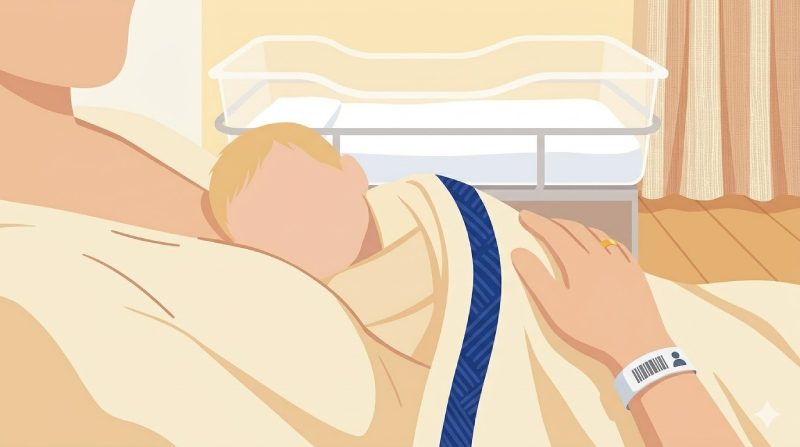
Day 1–2: What Happens in the Hospital
Your baby arrives looking nothing like the newborns in diaper ads. They may be covered in vernix (a white, waxy coating that protected their skin in the womb), their head may be cone-shaped from the birth canal, and their skin may be mottled, blotchy, or have a slight purple tinge in the first minutes. All of this is normal.
Within the first minute and at five minutes after birth, the care team assigns an APGAR score — a quick assessment of heart rate, breathing, muscle tone, reflexes, and color. A score of 7–10 means your baby is in good shape. Lower scores prompt extra monitoring or support, which is why you have a team in the room.
The American Academy of Pediatrics (AAP) recommends the first breastfeed within one hour of birth if you're nursing. Skin-to-skin contact immediately after delivery supports temperature regulation, blood sugar stability, and bonding. If a cesarean or medical complication delays this, it's not a failure — the first feed can happen when both of you are ready.
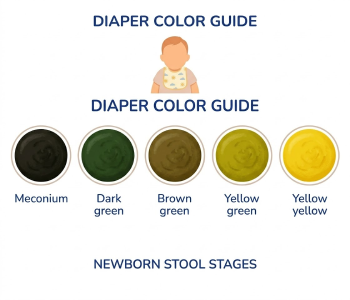
Expect the first diaper within 24 hours. It will be dark green or black and tar-like — this is meconium, the sterile waste your baby accumulated in the womb. It has no smell and is completely normal. It transitions to yellow or seedy mustard-colored stool by day 3–5 as your milk comes in or as formula feeding is established.
Days 3–5: The Transition at Home
Most families go home 24–48 hours after a vaginal birth or 72–96 hours after a cesarean. This is when the reality of newborn care sets in — and when several things happen simultaneously that no amount of reading fully prepares you for.
Weight loss
Newborns typically lose 5–10% of their birth weight in the first few days. A baby born at 3.5 kg (7 lb 11 oz) may drop to 3.15 kg (6 lb 15 oz) by day 3. This is expected and not a sign that feeding is failing. Weight should return to birth weight by days 10–14. Your pediatrician will check weight at the first office visit, usually scheduled for 3–5 days after discharge.
Milk coming in
If you're breastfeeding, your mature milk typically arrives between day 3 and day 5. Before that, your breasts produce colostrum — a thick, yellowish fluid that is low in volume but high in antibodies and exactly what your baby needs in those first days. When the milk arrives you may experience engorgement: breasts that feel hard, hot, and very full. Frequent feeding (every 2–3 hours) is the best way to manage this. A cold compress between feeds can relieve discomfort.
Jaundice
Around 60% of full-term newborns develop physiological jaundice — a yellowing of the skin and whites of the eyes — between days 2 and 5. It's caused by a temporary buildup of bilirubin as the liver matures. Most cases resolve on their own within two weeks with adequate feeding. Your hospital will check bilirubin levels before discharge and may schedule a follow-up blood test at home. See our complete guide to newborn jaundice for what to watch for and when to call the doctor.
What Feeding Looks Like in Week One
Newborns have stomachs the size of a marble on day one — about 5–7 ml. By day three it expands to the size of a ping-pong ball, roughly 22–27 ml. This is why early feeds are short and frequent.
The AAP recommends feeding newborns 8–12 times per 24 hours in the first weeks. That's roughly every 2–3 hours, measured from the start of one feed to the start of the next. Breastfed babies tend to feed more frequently than formula-fed babies because breast milk digests faster.
Typical formula amounts in week one:
Day 1–2: 15–30 ml (½–1 oz) per feed · Day 3–4: 30–60 ml (1–2 oz) per feed · Day 5–7: 45–90 ml (1.5–3 oz) per feed
Signs your baby is getting enough: 6 or more wet diapers per day by day 4–5, steady weight regain after the initial dip, and a baby who seems satisfied after feeds (not continually rooting). For a detailed breakdown of feeding amounts by age, see how much should a newborn eat.

What Diapers Tell You in Week One
Diaper output is one of the most reliable indicators that your newborn is feeding adequately. Here's what to expect day by day:
Diaper output by day:
Day 1: 1+ wet diaper, 1 meconium stool
Day 2: 2+ wet diapers, 1–2 stools (dark green transitioning)
Day 3: 3+ wet diapers, 1–2 stools (greenish-yellow)
Day 4–5: 4–6 wet diapers, 3–4 yellow seedy stools
Day 6+: 6+ wet diapers per day
Pale or white stools, red or blood-streaked stools, or fewer than one wet diaper per day of age in the first 4 days are reasons to call your pediatrician promptly. Our baby diaper guide covers every color variation and what it means.
Sleep in the First Week
Newborns sleep 16–17 hours per 24 hours, but not in one block — and not aligned with your schedule. Sleep periods last 2–4 hours, separated by feeding and alert windows of 30–60 minutes.
There is no day/night distinction yet. The circadian clock takes 6–8 weeks to begin developing. Attempts to "teach" a one-week-old to sleep at night will not work. What you can do: expose your baby to natural daylight during wakeful periods and keep nighttime feeds calm and dim. This plants early cues that gradually help the circadian rhythm form.
For what to expect as sleep patterns evolve over the coming weeks, see newborn sleep patterns: what to expect week by week.
When to Call Your Pediatrician Immediately
Most of what you encounter in week one is normal variation. But some signs require a same-day call or emergency visit:
Fever 38°C / 100.4°F or higher — in a baby under 3 months, any fever is a medical emergency. Go to the emergency department without waiting.
Fewer wet diapers than expected — fewer than one wet diaper per day of age in the first 4 days suggests inadequate intake or dehydration.
Yellow sclera (whites of the eyes) — jaundice in the whites of the eyes, or jaundice spreading to the abdomen and legs, warrants a bilirubin check. See our guide on newborn jaundice.
Difficulty breathing — nostrils flaring, skin pulling in between the ribs, or a bluish tinge around the lips.
Umbilical cord infection — redness spreading onto the belly skin (not just the base of the cord), foul smell, or pus.
Inconsolable crying lasting more than 2 hours — especially combined with any of the above.
Tracking Makes the Chaos Manageable
Sleep deprivation in week one is real. You will forget when you last fed. You will not be sure which breast you started on. You will wonder whether that diaper was an hour ago or three hours ago.
Logging feeds, diapers, and sleep as they happen — even with one tap — means you always have accurate information for your pediatrician at the 3-day and 2-week visits. It also shows you patterns you'd never notice from memory alone: cluster feeding in the evenings, longer sleep stretches forming, diaper output increasing as your milk comes in.
BabyJot is a free, private tracker that runs entirely in your browser. No account needed. Log a breastfeed with the left/right stopwatch, a bottle with volume, a diaper with color and type, or a sleep session — all from the same screen. Your data never leaves your device.
Latest Articles

Newborn Sleep Patterns: What to Expect Week by Week
Tracking Baby Milestones: What to Log and Why It Matters

Breastfeeding vs. Formula: A Practical Guide for New Parents

Newborn Jaundice: What Parents Need to Know

Understanding Baby Growth Charts: Percentiles Explained

Baby Sleep Regression: Ages, Signs, and What Actually Helps

Safe Sleep for Babies: AAP Guidelines Every Parent Should Know
Baby Nap Schedule by Age: How Many Naps and How Long
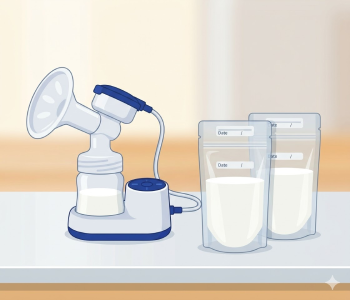
Pumping Breast Milk: Schedule, Storage Guidelines, and Tips

Starting Solid Foods: Signs of Readiness and First Foods to Try

How to Prepare for a Pediatrician Visit: What Data to Bring

How Much Should a Newborn Eat? Feeding Amounts by Age
Baby Diaper Guide: What's Normal and When to Worry
